


Choosing a card of all these different types of bank credit cards can be difficult. The sheer number of cards available these days, coupled with the multitude of welcome offers and incentives on request, can become bewildering.
Some Knowledge About Credit Cards
What is a secured credit card?
It is essential to realize that a debit card is not a credit card because the money it draws is money deposited in your bank account, not money you can spend. Unlike a secured credit card, prepaid cards can help you build up credit if you’re starting. The only risk is the dollars loaded on the card if it gets compromised or lost with it.
How To Choose The Right Card?
Banks also offer rewards for using credit cards, and this is an excellent way for banks to get low fees for using credit cards. Many banks offer their customers free checking accounts with their credit cards and free credit monitoring. However, credit card companies often charge an annual fee for all your credit card accounts. To simplify matters in this article, we will compare the types of cards currently on the market and list each’s pros and cons.

Different Types Of Bank Credit Cards
If you are currently looking for a new credit card, this guide will help you choose. From American Express to Barclaycard, we will list all the leading players and some lesser-known brands.
1. Bank of America Major League Baseball Mastercard
If you’re a baseball fan, then this card is worth considering. Each time you purchase this card allows you to show your loyalty to your choice’s baseball team.
Another feature of this card is choosing which type of purchase to obtain the highest rate of cashback. There are three cashback tiers of 3%, 2%, and 1%, and each month you can select which level to apply to a wide-ranging category of purchases. For example, if you know you will be doing a lot of car travel in a particular month, you could set your gas expenses in the highest tier.
Advantages
- Set Your cashback Preferences
- Preferred Rewards clients get their Cashback % boosted by between 25 and 75%
- Choice of baseball team logo
Disadvantages
- Cashback applies to the first $2500 of any quarterly spend
- After 15 Bill cycles, they charge 3% for balance transfers
- 3% fee applied to all foreign transactions.
Bank of America Major League Baseball Mastercard |  |
At a glance: | - |
Annual Fee: | Zero |
Introductory Purchase APR: | Zero for 15 months |
Introductory Balance Transfer APR: | Zero for months (applies to balance transfers made in the first 60 days only) |
Normal APR: | 13.99% - 23.99% Variable APR on balance transfers and purchases |
2. Barclays – Premier World Elite Mastercard
An excellent choice for travelers with a good credit rating, this card offers annual bonuses worth up to $250 that can be redeemed against travel costs and $125 cashback credit each year you spend a minimum of $25,000 on the card.
Advantages
- Great bonuses each year if you meet spending criteria
- Simple to understand bonus scheme for travelers
- They offset the annual fee by earned extras and perks
Disadvantages
- High spending threshold to qualify for bonuses
- Cashback rates are poor
- Annual Fee
Barclays – Premier World Elite Mastercard |  |
At a glance: | - |
Annual Fee: | $150 (not applicable for first year) |
Introductory Purchase APR: | Not Applicable |
Introductory Balance Transfer APR: | Not Applicable |
Normal APR: | 17.99%, 21.99%, 24.99% Rate is variable depending on credit history |
3. HSBC Cash Rewards Mastercard
The HSBC Cash Rewards Mastercard is an excellent all-round card with a healthy 3% cashback on all first-year purchases up to the first $10,000 spent, then 1.5% on all subsequent purchases. It offers some other bonuses, including complimentary ShopRunner membership and a 10% discount for bookings made through onefinestay.
Advantages
- Healthy cashback for the first year and unlimited 1.5% cashback afterward
- Great travel perks
- No annual fee
Disadvantages
- Balance transfer fee payable after the first year is 4%
- There are higher cashback rates on other cards
- 3% cashback rate is limited to the first $10,000 spent
HSBC Cash Rewards Mastercard |  |
At a glance: | - |
Annual Fee: | Zero |
Introductory Purchase APR: | Zero for first year |
Introductory Balance Transfer APR: | Zero for first year |
Normal APR: | 12.99%, 16.99% or 22.99% |
4. American Express – Blue Cash Preferred Card
This card offers a whopping 6% on any purchases made in US Supermarkets up to an annual limit of $6,000, then 1%. This aspect makes this card one of the best on the market for those with large grocery bills. Other benefits include 6% cashback on most US streaming services.
Advantages
- Great card for families with hefty cash back on groceries
- Cashback on streaming services
- Free ShopRunner membership
Disadvantages
- $95 annual fee
- 2.7% fee on overseas purchases
- No balance transfers
American Express – Blue Cash Preferred Card |  |
At a glance: | - |
Annual Fee: | $95.00 (There are frequent introductory offers, this may not apply for the first year) |
Introductory Purchase APR: | Zero for first year |
Introductory Balance Transfer APR: | Not Applicable |
Normal APR: | 12.99%, 16.99% or 22.99% |
5. Wells Fargo Rewards Card
This reward card has few things going for it. Its reward scheme offers 5x rewards points for the first six months on purchases on items like groceries, gas, and in drugstores up to a total of $12,500. However, after this period, it drops to single points on all purchases.
For those with a significant spend planned, this may be a good choice. The points offer combined with the 15 months 0% introductory purchase offer means they would consider initial savings.
Advantages
- 15 Month introductory offer is excellent on both transfers and purchases
- Initial reward scheme offers 5 x points
- No annual fee
Disadvantages
- After initial period points earnings are disappointing
- Foreign purchases carry a 3% charge
- Points expire after five years if unused
Wells Fargo Rewards Card |  |
At a glance: | - |
Annual Fee: | Zero |
Introductory Purchase APR: | 0% for first 15 months |
Introductory Balance Transfer APR: | 0% for first 15 months |
Normal APR: | 18.74% - 27.74% |
6. Capital One Quicksilver Cash Rewards Card
The Quicksilver Cash Rewards Card is is an excellent basic card that offers benefits like no transaction for overseas spending and unlimited 1.5% cashback on all purchases. Additionally, if you spend $500 or above in the first six months, you receive a $200 cashback bonus.
An excellent card for frequent travelers and incurring no fees for overseas use also includes travel insurance and a 24-hour travel assistance service.
Advantages
- 15 month introductory 0% on purchases offer
- No annual fee
- $200 cash back if you spent $500 in the first six months
Disadvantages
- Flat fee cashback rate
- No balance transfers
- No Bonus earnings after the first six months
Capital One Quicksilver Cash Rewards Card |  |
At a glance: | - |
Annual Fee: | Zero |
Introductory Purchase APR: | 0% introductory offer for the first 15 months |
Introductory Balance Transfer APR: | Not applicable |
Normal APR: | Variable Rate 15.49% to 25.49% |
7. Fifth Third Bank TRIO Credit Card
With this card, you can earn bonus rewards and cashback on some common spending categories, including 2% on groceries, gas, drugstores, and 3% on restaurants. However, the quarterly spending limit on these rewards is only $1,500 combined. After this, the rate falls to a flat 1%, although a higher rate of 1.5% is available depending on various spending criteria.
A bonus offer of $100 cashback is available if you spend $1,000 in the first 90 days.
Advantages
- Reasonable initial quarterly rate of cashback
- No annual fee
- No interest on purchases for first year
Disadvantages
- Low spending limit on higher cashback tier
- High spending required to qualify for the introductory bonus
- Application criteria rules many people out
Fifth Third Bank TRIO Credit Card | 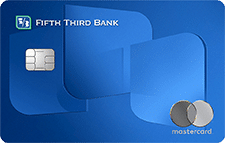 |
At a glance: | - |
Annual Fee: | Zero |
Introductory Purchase APR: | 0% for the first year |
Introductory Balance Transfer APR: | 4% |
Normal APR: | Variable Rate 15.49% - 24.49% |
8. Citibank – Citi Diamond Preferred Card
This card is a simple no-rewards credit card that can benefit those who frequently spend on sporting events, concerts, and dining experiences. The card includes membership of Citi entertainment which can special access and other perks on such spending.
Advantages
- Offers comprehensive shopping protection
- 0% purchase interest for the first 18 months
- Great deals on events
Disadvantages
- No rewards scheme
- Interest on balance transfers
- Balance transfers must be within four months of the start date
Citibank – Citi Diamond Preferred Card |  |
At a glance: | - |
Annual Fee: | Zero |
Introductory Purchase APR: | 0% for 18 months |
Introductory Balance Transfer APR: | 3% or $5 whichever is greater |
Normal APR: | Variable Rate 14.74% to 24.74% |
9. Chase Freedom Unlimited
This card offers reasonable cashback rates, including 5% cashback rates on grocery purchases up to a limit of $12,000 in the first year. All other purchases earn 1.5% cashback except for any traveling purchased through Chase, which also reaches the higher tier of 5%.
You can also earn an introductory cashback bonus of $200 if you spend $500 or more in the first three months.
Advantages
- Good reward rates
- No annual fee
- Good introductory bonus
Disadvantages
- Has foreign transaction fee of 3%
- Walmart and Target excluded from 5% cash back on groceries
- Needs an excellent credit score to qualify
Chase Freedom Unlimited |  |
At a glance: | - |
Annual Fee: | Zero |
Introductory Purchase APR: | 0% for 15 months |
Introductory Balance Transfer APR: | Not applicable |
Normal APR: | Variable from 14.99% – 23.74% |
10. Bank of America Business Advantage Travel Mastercard
The Bank of America Business Advantage Travel Mastercard is a card explicitly appealing to frequent travelers. However, to take full advantage of all the card features, travel needs to be booked through Bank of America’s travel bureau.
If booked through the Bank of America, then the rewards are 3%. Otherwise, the rewards are at the standard rate that the card offers, 1.5%.
Advantages
- Great for travelers
- No annual fee
- No foreign transaction fee
Disadvantages
- No offer on balance transfers
- Travel booking options are limited to Bank of America travel agency only
- Requires excellent credit rating
Bank of America Business Advantage Travel Mastercard |  |
At a glance: | - |
Annual Fee: | Zero |
Introductory Purchase APR: | 0% for 9 months |
Introductory Balance Transfer APR: | As per regular APR |
Normal APR: | Variable from 12.24% to 22.24% on purchases and balance transfers |
11. Capital One Venture Rewards Credit Card
The Capital One Venture Rewards Credit Card is another great card for travelers with its generous miles award scheme. It offers double mile rewards on all spending, and you can earn a 100,000 miles bonus if you spend $20,000 in the first year of opening the card.
Advantages
- Grand bonus miles schemes for frequent travelers
- No foreign transaction fees
- Limited travel insurance scheme
Disadvantages
- Annual fee of $95.00
- Apart from travel benefits, the bonuses are limited
- No introductory offers
Capital One Venture Rewards Credit Card |  |
At a glance: | - |
Annual Fee: | $95.00 |
Introductory Purchase APR: | Not Applicable |
Introductory Balance Transfer APR: | Not applicable |
Normal APR: | Variable from 17.24% through to 24.49% |
12. Citibank – Citi Double Cash Back
This card is ideal for those trying to build credit ratings. As an incentive, it pays a straight 1% cashback on purchases and then another 1% when you use it to purchase. The wiser you are when using this card, the greater the rewards are.
Advantages
- Unlimited 1% cashback, which you can double when you pay
- 18 month 0% offer on balance transfers(then 3%)
- No annual fee
Disadvantages
- No introductory bonus
- Foreign transaction fee of 3%
- Possibly only 1% cashback if you delay payments
Citibank – Citi Double Cash Back |  |
At a glance: | - |
Annual Fee: | Zero |
Introductory Purchase APR: | Not Applicable |
Introductory Balance Transfer APR: | 0% for 18 months |
Normal APR: | Varies from 13.99% to 23.99% |
The Bottom Line
Simply put, a debit card is attached to your bank account and allows you to spend existing funds, while a credit card will enable you to spend money from your checking account and repay the balance later. A credit card never limits you by the amount of money you have in your checking account, which can be a significant fraud for many consumers that charges the card. Credit rating formulas tend to reward those with high credit scores and good credit performance. Each of these twelve Bank credit cards has its advantages and flaws. So, what would I recommend? I think the Bank of America Major League Baseball Mastercard. Why? Come on; it’s a Major League Baseball Mastercard!

